I have lots of good recipes to post – just have to find the time to write them up. Watch this space! In the coming weeks I will posting a few French style recipes, deciding what to cook at a family meal to celebrate a special birthday and making the most of the glut of seasonal fruit and veggies…
This red pepper chutney is a sweet and sour relish which can served at dinner with sausages or home-made burgers, or at lunch time with cheese or cold meat and crusty bread. It can be made at any time of year as the ingredients are easy to find, although it is good idea to make a quantity in the Autumn when there are plenty of apples available.
The recipe comes from a great little book I bought many years ago called A Pocket Book on Pickles & Preserves: techniques, hints & recipes by Olive Odell, which I always turn to first when hunting for a pickle or preserve recipe.

Red Pepper Chutney
(Makes 2-3 x 1lb jars)
4 red peppers, seeded and finely chopped
750g/1½lb apples, peeled, cored & sliced
225g/8ozs onions, peeled and finely chopped
300ml/½pt spiced vinegar
100g/4ozs sugar
1 clove garlic, optional
1. Pour boiling water over the peppers, leave for 1 minute and then drain.
2. Place drained peppers in a pan with the apples, onions and garlic and cook gently until tender.
3. Stir in the vinegar and sugar and continue to cook until thick, stirring occasionally.
4. Wash the jars well and sterilise. I usually do this by filling the jars with boiling water and putting the lids in a bowl of boiling water. I pour away the water just before filling each jar and immediately take the lid from the bowl and screw it on. Pot the mixture into the warm jars and seal.
5. Store for 4-6 weeks before serving.
Posted in Accompaniment, Chutney-Pickles | Leave a Comment »
Out for the day in the middle of rural Oxfordshire, we pulled off the road to eat our sandwich lunch. I spotted a tree in the hedgerow nearby with, sadly, just a few damsons left very high up but nevertheless went to investigate. I was sure someone had beaten us to it, but when I got there I found the ground below the tree thick with fallen damsons. We filled our sandwich container and a few other bags and boxes we had to hand with the ripe and juicy fruit. What on earth to do with such a large harvest, I wondered. Crumbles, of course. Jam possibly?
Once at home I did some searching and came across this delicious chutney in Delia’s How to Cook: Book 3 (Pub: BBC) - Delia Smith comes up trumps yet again! (The recipe can also be found on Delia Smith’s website.) I thought I would try just a half quantity the first time, but I would not hesitate with making the full amount next time. … and there will be a ‘next time’. (Actually I have put some Damsons in the freezer so if needed I could make some more this year.) My only variation to the original recipe was to add the sugars right at the end of the cooking time, something I do regularly. This allows more of the vinegar to boil away, meaning the sugar is less likely to over caramelise and give the finished chutney a burnt taste. It also means that the finished chutney retains a better and lighter colour. My half quantity made nearly 3 x 1lb jars, so the full quantity given below would make about 6 x 1lb jars. This spicy, plummy chutney is delicious served with cheese and cold meats. We have made a note of the location of ‘Plum Corner’ (as we have named our picnic spot) and plan to go back there another year!

Spiced Damson Chutney
(makes about 6 x 1lb jars)
1.35kg/3lb damsons
2 heaped tsp ground ginger
2 small cinnamon sticks
25g/1oz allspice berries
1 dessertspoon cloves
1.2litres/2 pints malt vinegar
45og/1lb cooking apples, unpeeled
3 large onions, peeled
3 cloves garlic
45og/1lb seedless raisins
450g/1lb dark soft brown sugar
450g/1lb demerara sugar
2tbsp sea salt
1. The stones need to be removed from the fruit. There are two ways of doing this. Either use a knife to remove each one before cooking, or
having counted the number of damsons you use, stew the fruit gently with 225g/½pt of the vinegar for about 20minutes and then remove the stones from the pan with a fork, making sure you have accounted for them all.
2. Place the stoned damsons, whole or pre-stewed, in a large preserving pan or heavy based saucepan. Leaving the apples unpeeled, remove their cores, finely chop them and add to the pan. Peel and finely chop the onions and add to the pan. Crush the garlic cloves thoroughly and add to the pan. Add the ginger, raisins and vinegar - or remaining vinegar if you have already part stewed the damsons.
3. Tie the cinnamon sticks, allspice berries and cloves in a piece of muslin – I knot them into a length of leg and foot cut from a clean old pair of tights. Tie with some string onto the handle of the pan and suspend the package in the chutney mixture.
4. Bring the mixture in the pan to the boil and lower the heat. Simmer very gently for 2-3 hours. Stir occasionally, particularly towards the end of the cooking time when the chutney is more likely to stick.
5. When almost all the vinegar has disappeared, stir in the sugars and make sure they are well dissolved. Continue to cook and when the chutney has thickened to a soft consistency and where you can draw a channel in the mixture so it leaves an imprint for a few seconds which does not fill with vinegar.
6. Wash the jars well and sterilise. I usually do this by filling the jars with boiling water and putting the lids in a bowl of boiling water. I pour away the water just before filling each jar and immediately take the lid from the bowl and screw it on.
7. Cool, label with the contents and date of making. Keep in a cool cupboard for 2 and preferably 3 months before eating so the flavours can develop.
Posted in Accompaniment, Chutney-Pickles | Leave a Comment »
Lasagne al Forno, which I make with my own version of Ragu Bolognaise, has developed over the years. The combination of minced beef with a small amount of diced bacon in a rich sauce, layered with sheets of Lasagne pasta, is one of my daughter’s favourites and regularly turns up as the main course on her birthday. It is worth making a double quantity of this Lasagne. A second lasagne can be frozen for later use. (Do this in a foil lined dish. The dish can be taken from the freezer when the lasagne is frozen leaving just the foil enclosed Lasagne. The foil should be removed from the frozen lasagne before it is placed back in the original dish for defrosting. Allow to thaw fully before cooking for 45minutes to 1hr as in the original instructions.)
This method for Lasagne al Forno is my own tried and trusted recipe, not taken from any particular book but adapted down the years as I have discovered new ‘twists’ that work well. I expect it will continue to develop, so this page may occasionally be updated.

Lasagne al Forno
(Serves 6)
1 quantity of Ragu Bolognaise (see basic recipe)
200g dried lasagne sheets: about 8/9 sheets, more if you wish (use home made pasta if available)
30ml/2tbsp cornflour
500ml/1pt milk
5g/1 knob butter
5ml/1tsp grated nutmeg
Salt & pepper
25g/1oz Parmesan cheese (or cheddar if unavailable) – more if you wish
1 or 2 tomatoes to slice for decoration
15ml/1 tbsp chopped fresh parsley (omit if unavailable)
1. Follow the instructions for the Ragu Bolognaise
2. Mix the cornflour to a paste in a saucepan with a little milk and then gradually stir in about ¾ of the remaining milk. Gently heat, stirring continuously until the sauce thickens. This can also be done in a jug in the microwave oven, stirring well in between short bursts of heat. Stir in the nutmeg and season to taste with salt & pepper.
3. Using an oblong dish first put in a layer of meat mixture, followed by a drizzle of white sauce (2 or 3 tablespoons) and cover with 2 or 3 lasagne sheets, depending on the size of the dish. Continue adding layers finishing with meat. Rinse the pan the meat sauce has been cooked in with a little water and gently add these juices around the edges of the dish. It is important to have plenty of liquid in the dish as this helps the dried lasagne sheets to cook thoroughly and will evaporate during cooking time so just a thick sauce is left. Finally finish with a layer of the remaining white sauce, covering as evenly as possible.
4. Sprinkle well with parmesan cheese and slices of tomato to decorate. Bake at 200oC (190oc Fan oven)/400oF/Gas 4 for 45mins to 1hr. Scatter with chopped parsley to garnish.
5. Serve with salad or a green vegetable and hot garlic bread.
Posted in *Entertaining*, Italian Style, Main Meal (Dinner), Meat (Beef), Pasta | Leave a Comment »
The most well known Ragu takes its name from the Italian town of Bologna. This rich sauce can be served on a bed of cooked pasta: spaghetti, tagliatelle or one of the many shapes. It can also be cooked as part of the layered pasta dish Lasagne al Forno (literally lasagne cooked in the oven) or spooned as a filling into canelloni: tube shaped pasta. Pasta is available dried or fresh in the supermarket, but if possible use home made. Delicious!
This version is my own which has developed over the years as I have discovered ‘improvements’ in recipe books, from dining out and from TV cooks. I use minced beef (some people prefer diced beef). Once, having eaten a delicious version in a restaurant who included diced bacon, this has become a regular addition. I cannot remember where I first heard about starting the recipe by frying the onion, carrot and celery mixture together, but it adds a wonderful flavour. The Italian word for this ‘trinity’ of vegetables, when it is fried in a small amount of oil, is soffritto: in French the same mixture is called mirepoix. Heston Blumenthal, the experimental chef, used soffritto when he made Ragu, but added a crushed star anise, more commonly used in Oriental cuisine, as it is a flavour enhancer. I was not sure about all the additions he made to the dish – there seemed rather too many complex flavours - but the star anise sounded worth trying, though I have yet to sample it. Food writer Sue Kreitzman, always wanting to make dishes a bit healthier by reducing the red meat content per head, suggests the addition of finely diced aubergine, which cooks down to become invisible. This is a good tip if you are trying to make your meat go a bit further too. The addition of red wine gives an extra special richness to the ragu, but you can leave it out, especially if you are feeding those who do not want the alcohol – even though, of course, the alcohol content will be long gone just leaving the richness of flavour. I always add wine if I have some to hand. Part bottles of wine that have been left over after a dinner can be frozen in plastic containers: it is perfect for adding to recipes, as long as the food will be cooked. The alcohol content means that the wine will not solidify completely and the frozen mush can be conveniently spooned out and used as and when required.
Ragu Bolognaise(Serves 6)
1 large carrot, finely diced
1 large onion, finely diced
1 stick celery, finely diced
2 cloves garlic, minced or crushed
125g/40zs diced bacon, smoked or unsmoked
1 small crushed star anise (optional and untried!)
125g/4ozs button mushrooms, quartered (or larger ones, sliced)
1 medium Aubergine, diced (optional)
15ml/1tbsp Italian herbs
500g/1lb minced beef steak
30ml/2tbsp tomato puree
1 x 400g tin tomatoes, chopped
1 red pepper
1 green pepper
1 small wineglass of red wine (about 125ml/¼pt)
15ml/1tbsp olive oil
1. If using Aubergine it is usual to sprinkle it with salt, place it in a colander, cover it with a plate and place a weight on top of it for at least 30minutes, to let the juices can run out. You can cut out this step if you are short of time: I have never noticed much difference in taste.
2. Cook the finely chopped carrot, onion and celery mixture in olive oil until it is softened. Add the crushed garlic, the bacon with the crushed star anise (if using) and continue to cook for a further 5 minutes. Drain and rinse the aubergine (if using) and stir in with the chopped mushrooms and herbs. Cover the pan and continue to cook for a further 5 minutes.
3. Stir in the minced beef and cook slowing, turning from time to time, until it is brown. Mix in the tomato puree. Chop and stir in the tin of tomatoes. Cut the peppers into small dice and stir into the mixture. Stir in the red wine. Cover the pan and simmer the mixture for at least 30 minutes longer, but more if possible especially if it is being served as a sauce rather than being made into a dish that will be given extra cooking time when baked in the oven. It is quite common to cook the meat mixture for several hours during which time it the flavours develop as the sauce reduces. I think that 1hour cooking time is the minimum required for a good and tasty sauce.
Posted in Basic recipe, Italian Style, Meat (Beef) | Leave a Comment »
I was delighted to discover that you could make a version of my favourite Summer Pudding (usually raspberries, strawberries & currants) with Autumn fruits (plums, blackberries and apples) and that it was equally delicious. This, along with Lemon Meringue Ice Cream, was the dessert course for a special family meal.
The original version of this recipe is from my well used paperback Claire MacDonald’s Quick & Easy Desserts & Puddings, originally borrowed from the library on a long loan and then found in a charity shop. I used the much sweeter Victoria plums in place of tart Damsons and substituted half the apples with pears to give an extra flavour dimension. The proportions of apples to pears or plums to blackberries can be adjusted slightly if required. Obviously, the amount of bread needed will vary according to the size of loaf. Dropping the apples and pears straight into salted water once peeled stops them from going brown although retaining their white colour is not absolutely essential in this recipe as they will become stained with the plums and blackberries. It is important that time is allowed for the juices to seep into the bread and the flavours develop fully so make Autumn pudding in advance, ideally on the day before it is served although it can be made up to four days beforehand and can also be frozen.

Autumn Pudding
(Serves 6-8)
8-12 thin slices of white bread, depending on loaf size, crusts removed
300g/12ozs red plums, preferably Victoria
300g/12ozs Blackberries
225g/8ozs sweet eating apples, Cox if available – peeled, cored & chopped
225g/8ozs sweet pears, Conference if available - peeled, cored & chopped
225g/8ozs soft brown sugar
1. Line the base and sides of a 1.2litre/2 pint pudding bowl with some of the sliced bread, cutting pieces to fit any small gaps. Leave the remaining pieces of bread to one side as they will form a central layer and the lid.
2. Halve the plums and remove their stones if possible. Otherwise, count the plums first so you know how many stones you have to remove from the pan. Put the plums into a pan with 300ml/10fl ozs water. Cover and simmer gently for 5 minutes. Leave to cool and then remove all the stones with a slotted spoon and fork if not already done.
3. Add the remaining blackberries, chopped apples and pears and sugar to the pan and cook for a further 5 minutes. Remove from the heat. Using a teaspoon, remove and set aside a small number of whole cooked blackberries for decoration.
4. Spoon fruit into the bread lined mould up to half way. Cover with a single layer of bread, cutting slices to size as required. Reserve a very small amount of juice to pour over any areas of bread that remain white once the pudding is unmoulded.
5. Continue to fill the bowl with the remainder of the fruit mixture and then add a final covering layer of bread, again cutting slices to size so the fruit is completely enclosed. Trim off any overlapping pieces of bread
6. Put a plate or saucer on top of the final bread layer and add a weight: a large tin or jar is ideal. Once the pudding has cooled, place it in the fridge on a plate to catch any liquid that overflows.
7. To serve
Autumn Pudding should be gently unmoulded onto a serving plate. It should mostly hold its shape but usually collapses slightly. Pour the reserved juices over the unmoulded pudding, paying special attention to any white areas. Decorate with the reserved blackberries. Serve with cream or ice cream.
Posted in *Entertaining*, Can make in advance, Dessert (Cold), Dessert (Fruit Based) | Leave a Comment »
For a special family birthday meal I was planning to serve Autumn Pudding as dessert, but also wanted to please the ice cream loving members of the family! I like the mixture of lemon and blackberry so thought this recipe sounded ideal. It was very sweet and very rich, in some ways rather overpowering the Autumn Pudding, but I would definitely serve it again as it was delicious. The recipe uses Lemon Curd, the original version suggesting either a luxury shop bought brand or home made. To me there was absolutely no contest so I added making curd to an already busy day. Next time – and there will be a next time – I would definitely do this job in advance!
The original recipe came from One Step Ahead by renowned cookery writer Mary Berry. The original instructions did not use an Ice Cream maker. I have given them below in addition to my machine variation. The only alteration I would make would be to use lightly whipped Whipping Cream in place of the thick double cream when using an ice cream maker as it is easier to pour through the small hole in the lid of the rotating machine. However you will need the thickness of double cream if you are making the original method.

Lemon Meringue Ice Cream
(Serves 6)
50g/2ozs meringues (a good use for broken meringues)
300ml/½pint Double cream – Whipping for Ice Cream machine (Elmlea half fat)
Zest & juice of 1 lemon
½jar of luxury or home made lemon curd
1. Line a 1lb/5oog loaf tin or similar sized plastic freezer box with cling film.
2. Break up the meringues into small chunky pieces (not too large, but not dust either).
3. Ice Cream maker:
a. Whisk the whipping cream lightly until the whisk leaves a trail when lifted.
b. Wash the lemons well and remove zest with a zester or a fine grater, making sure that no white pith is removed.
c. Stir the zest, juice and lemon curd into the cream.
d. Pour into the machine and churn for 10-15 minutes until thick gradually introducing the meringue pieces through the hole.
e. Tip into loaf tin or container, cover with cling film or a lid and freeze for at least 6hours.
4. By hand:
a. Whisk the double cream lightly until the whisk leaves a trail when lifted.
b. Wash the lemons well and remove zest with a zester or a fine grater, making sure that no white pith is removed.
c. Stir the zest, juice and lemon curd into the cream.
d. Fold in the meringue pieces trying not to crush them too much.
e. Tip into loaf tin or container, cover with cling film or a lid and freeze for at least 6hours.
5. To serve:
a. Defrost in the fridge for about 20minutes before serving.
b. Delicious served on its own or with an accompaniment of simple cold stewed Autumn (or other seasonal) fruit mixture or a simple sliced citrus dish such as Sliced Caramel Oranges.
c. Decorate with a few strands of crystallised lemon zest or peel, if available. (I keep the zest used when making Lemon Sorbet.)
d. Any remaining sorbet can be replaced in the freezer wrapped in cling film.
Variations:
Use different flavours of fruit curd: Lime, Orange or even Blackberry (recipe to follow if it is successful) would be lovely.
Posted in *Entertaining*, Can make in advance, Dessert (Cold), Dessert (Fruit Based), Ice Cream/Sorbet/Sherbet | Leave a Comment »
I wanted to make Lemon Meringue Ice Cream and the recipe called for good luxury shop bought or home made Lemon Curd. Shop bought?! (Even if it is luxury.) Lemon curd is so easy to make and I had the ingredients in the fridge so it was no contest. I’m surprised I don’t make it more often: it never lasts long! When I had used the half jar needed to make the Ice Cream we still had a good quantity to spread on bread or stir into yoghurt. You can make other citrus curds: Orange Curd is a favourite and Lime Curd sounds lovely too. I’ve seen a recipe for Blackberry Curd which I would like to try as well (actually its blackberry and apple): another way to use some of the blackberries in the freezer that we picked earlier in the summer.
There are lots of recipes for basic Lemon Curd around and the proportions and ingredients were all virtually the same. It is important that curds are cooked slowly without boiling otherwise the eggs will curdle (scramble!). If this starts to happen then the curd should be removed from the heat immediately and whisked well, which may save the mixture. If the curdling disappears then the mixture can be returned to a gentle heat. The mixture will thicken as it cools so do not overcook. The quantities given should make about 2 x 1lb jars. The shelf-life of curd is very short and they should be stored in the refrigerator and eaten within 4-6 weeks maximum. The conventional way to make curd is on the stove top but I have also successfully made it in a Slow Cooker. I have given instructions for both methods. I have seen a Pressure Cooker recipe too and I expect that it is possible to use a Microwave but once you have a good and easy method why change it! The recipes below come from (stove top method) The Penguin Book of Jams, Pickles & Chutneys by David & Rose Mabey and (slow cooker method) The Cordon Bleu Slow Cooker manufacturers Instruction & Recipe Booklet.

Lemon Curd
Grated rind & juice of 4 lemons
4 eggs
100g/4ozs butter
450g/1lb granulated sugar
1. Wash the lemons well and remove zest with a zester or a fine grater, making sure that no white pith is removed.
2. Put the lemons in a microwave, if available, and give a short burst of heat (about 20seconds) which will help the lemons to yield more juice. Squeeze the juice from the fruit.
3. Stove top method:
a. Place juice, zest, sugar and butter in a bowl over a saucepan of boiling water or in the top of a double boiler.
b. Simmer until the sugar is dissolved, stirring well.
c. Allow to cool for 5 minutes.
d. Add the beaten eggs and continue to simmer the mixture gently, stirring regularly, until the mixture has thickened enough to coat the back of a wooden spoon.
e. (The recipe suggests that if it doesnt seem to thicken a small amount of ground rice could be added: my curd took over half an hour so be patient!)
4. Slow cooker method:
a. Preheat the slow cooker for 20 minutes.
b. Place juice, zest, sugar and butter in a saucepan until the sugar is dissolved.
c. Allow to cool for 5 minutes.
d. Add the beaten eggs and stir well.
e. Place in a 1litre/2pt pudding basin covered with aluminium foil or a lid and place in the crock pot bowl.
f. Add boiling water so it reaches half way up the sides of the pudding basin.
g. Using the higher setting (my crock pot has high & low setting) cook for 1 to 1½ hours or until the mixture has thickened enough to coat the back of a wooden spoon.
5. Wash the jars well and sterlise. I usually do this by filling the jars with boiling water and putting the lids in a bowl of boiling water. I pour away the water just before filling each jar and immediately take the lid from the bowl and screw it on.
6. Beat the curd until it is creamy. Pour into the prepared jars, cover and label. Store in the refrigerator and use within 4-6 weeks.
Posted in Breakfast/Brunch, Can make in advance, Jam-Curd-Marmalade, Packed lunches, Picnics/Outdoor Food, Tea Time/Coffee Time | Leave a Comment »
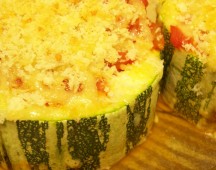
Having bought several marrows as they were very reasonably priced on the market, I searched through my books and on the web for some tasty ideas. This one caught my attention, especially as it used both couscous, which is lovely as a vegetable stuffing and spicy chorizo sausage. You could add some bacon to the couscous stuffing and top with some melted cheese, either grated or a thin slice. The mixture could be used to stuff peppers (although you might like to leave out or use a different colour pepper in the filling mixture). A small portion of this stuffed in a marrow ring or half a courgette would make a good starter.
This was based on an original recipe created by chef Antony Worrall Thompson on the BBC Food website. It was originally paired with a recipe for Rosemary Roasted Marrow. I am not sure I would want to eat marrow cooked in two different ways at the same meal, but I’d be happy to eat them separately. Certainly this first recipe is tasty so I plan to try the other recipe soon. It sounds as if it could be a good accompaniment for lamb.

Chorizo, Pepper & Couscous Stuffed Marrow
(Serves 4)
1 short thick marrow (about 900g) preferably evenly shaped
100g/4oz couscous
1 lemon, juice only
2 tbsp olive oil
1 red onion, finely sliced
100g/4oz chorizo, cut into small chunks
1 red pepper, chopped into small dice
4 tomatoes, chopped
1 tbsp parsley, roughly chopped
1 tbsp mint, roughly chopped
1 tbsp coriander, roughly chopped
salt and freshly ground black pepper
1. Preheat an oven to 200oC/390oF/Gas 6.
2. Slice the marrow in half lengthways, scoop out all the seeds and place on a roasting tray.
3. Place the couscous in a bowl with the lemon juice and enough boiling water to cover. Allow to soak for five minutes.
4. Heat the olive oil to a frying pan. Gently fry the red onion and chorizo for 5 minutes until the onion is just softened and the chorizo is just crisped and the juices released. Add to the couscous and then stir in the pepper, tomatoes and herbs.
5. Mix well and season to taste with salt and black pepper. Spoon into the centre of the marrow pieces.
6. Pour a little water into the tray around the marrow pieces, but keep well below the level of the filling, place in the oven for 20 minutes. Cook until piping hot and the marrow is just tender.
7. Season with a little salt and black pepper. Serve with a small side salad. This is a good meal for anyone who does not eat much meat, but for additional meat it could also be served with rashers of bacon.
Posted in Couscous/Grains, Light Meal (Lunch/Supper), Simple recipe/Novice cook, Starter | Leave a Comment »
September ’Meanderings’ …
Pictured (top to bottom)
Spanish Style Chicken with Red Peppers
Tarte au Citron
Baked Tomato Stuffed Marrow
Raspberry Bakewell Pudding
Before I review my cookbook meanderings for September, I’d like to pause to raise a glass to toast chef and food writer Keith Floyd, who died on 14 September 2009. He was always such fun to watch, often sharing a bottle of wine with the food he was cooking and never afraid to say when a dish had not worked out quite as he had originally planned. His programmes, in particular those in later years, gave insights into the cultures and kitchens of those he interviewed, as well as showing us a wide range of traditional recipes and his own variations. His recipe for Rabbit with Red Peppers is one of our favourite recipes (except I make Chicken with Red Peppers, as rabbit is so difficult to get). I will have to make some again soon in his honour!
I have enjoyed looking through the French cookery books and trying to hang on to some of our summer holiday food memories. We have eaten savoury galettes, a Basque-style Tortilla omelette and Far Breton. I have posted a Tarte au Citron recipe, but I have yet to find a reasonably authentic French pork pâté recipe to try out. I have re-invented my usual Ratatouille recipe adding some home dried orange peel, a tip from Cooking in Provence by Alexander MacKay & Peter Knab, where it is used in their version of Ratatouille. I found it really adds a ’sunshine’ flavour and smell of the Mediterranean. I will keep a jar of crushed dried peel in the cupboard from now on: just remove the zest, but not the pith, with a peeler and dry in the airing cupboard (takes about 3 days) or in a very low oven (takes about 6 hours). I’m sure I will continue to explore recipes from France in the coming months.
In the meantime, I have been starting to make use of the wonderful Autumn fruits and vegetables that we have acquired: a chance find of damsons on an Oxfordshire country lane and the large quantities of cucumbers and beetroot bought on the local market. I had planned to make chutneys and pickles in October so I had plenty to get on with!
At the end of October we are going to Amsterdam for a few days for a short break: a special birthday celebration. Alongside traditional Dutch food, there seems to be much variety coming from the melting pot of the many different cultures who call the country home following centuries of exploration and conquest. I will be looking out for Erwetensoup (a thick pea soup, which I am fairly sure I have eaten before and should be great if the weather is
chilly), pancakes, Dutch Apple Pie, peanut biscuits (remembered fondly from my previous visit) and spiced biscuits called Speculaas.
For a full list of postings since my August Meanderings see below. (Recipes already posted have been highlighted and the others will appear in coming weeks.)
September Recipes …
Baked Tomato Stuffed Marrow
Basic Recipe: Tortilla Omelette – with Bacon, Mushroom & Spinach
Lime & Basil Baked Salmon Parcels
Raspberry Bakewell Pudding
Rich Coconut Dessert Cake
Roast Lamb with Chilli Sauce
Roasted Lemon Chicken
Tarte au Citron
Meanderings ‘a la carte’ from previous months
‘For what we are about to receive…’ October 2009 and beyond
Food for the mind…
Non Fiction Food book
I am still reading In the Devil’s Garden: a sinful history of forbidden food by Stewart Lee Allen. No recipes, but lots of fascinating foodie facts and theories. Not a book to rush through, I expect it will be dipped into for some time to come.
… and for the October table …
I’m still on the hunt for an authentic French pork pâté recipe and would also like to try making an open French Apple tart while there are so many good Autumn apples available (though sadly our own tree has failed badly this year). I want to continue to cook with the great Autumn produce: marrows, squashes, apples and pears in particular and I will be making some of our favourite chutneys and pickles to see us through the winter months.
Recipe books I’ll be looking through…
A Pocket Book on Pickles & Preserves: Techniques, Hints & Recipes by Olive Odell – Pub: Octopus
Home Preserves by Jackie Burrow – Pub: Treasure Press
The Penguin Book of Jams, Pickles & Chutneys by David & Rose Mabey – Pub: Penguin
The Perfect Pickle Book by David Mabey & David Collison – Pub: BBC
Home Preserving & Bottling by Gladys Mann – Pub: Hamlyn Kitchen Library
Happy Eating!
Posted in 6. MEANDERINGS 'À LA CARTE' | Leave a Comment »
I often abandon traditional roast dinners in the hot weather, but this zesty lemon flavoured dish has a ’summery’ feel and would be good served with salad, although it could equally as well be eaten with potatoes and vegetables. The original recipe was called Chicken with Spicy Potatoes, which was how I first served it, except I successfully used chicken thighs in place of the chicken legs. The original recipe suggested that the chicken was served with a simple side dish of green peas as well as the potatoes in a spicy sauce, instructions for which were included. I decided the chicken part of the dish was more successful on its own and I had better spicy potato recipes in other places.
The recipe was found in the July 2009 issue of the ASDA free instore magazine.

Roasted Lemon Chicken
(Serves 4)
4 Chicken leg or breast quarters
or
1 or 2 chicken thighs per person, depending on size
1 large onion, cut into eight pieces
2 garlic cloves, halved
2 lemons, washed
1. Preheat oven to 190oC/Fan 170oC/Gas 5.
2. Put the chicken pieces, removing the skins if you wish, into a greased roasting dish along with the garlic and onion pieces. Halve the lemons, squeeze the juice over the meat and place the shells in the dish.
3. Cover and bake for 45 minutes. If you wish to crisp the chicken skin then uncover the dish for the last 5-10minutes, but add a little water if necessary to stop the pan drying out and burning.
4. For a citrus gravy, thicken any meat juices with cornflour, first straining out any bits and removing excess fat.
5. Serve with roasted or spiced potatoes and peas or salad.
Posted in *Entertaining*, Light Meal (Lunch/Supper), Main Meal (Dinner), Meat (Poultry), Simple recipe/Novice cook, Sunday Roast | Leave a Comment »